Resources on sustainability sciences and research

Below is a list of some resources for folks interested in sustainability sciences or research, but are not affiliated to universities. Note that they are a very small set of selection, and the list would keep growing.

To read/ study

  1. 'Silent spring' by Rachel Carson - little outdated, but first book which revolutionized the need of sustianable businesses - a bit outdated, but still worth it.

  2. All 3 books by Peter wolheben: secret life of trees, network of nature and on animals' emotions

  3. 'The limits to growth' - a classic by donella maedows on economic growth as general limitation.

  4. 'This changes everything: capitalism vs climate' by Naomi Klein.

  5. 'Climate change denial' by Haydn Washington.

  6. And a list in making: https://www.goodreads.com/review/list/44310349?shelf=nature-environment

IMG_20200810_183913.jpg

Acadmic Books

  1. Sustainability Science: https://science.sciencemag.org/content/292/5517/641.full

  2. Sustainability Marketing: https://sisis.rz.htw-berlin.de/inh2012/12427763.pdf

  3. Sustainability and Cities: Overcoming Automobile Dependence: https://www.scribd.com/book/252760357/Sustainability-and-Cities-Overcoming-Automobile-Dependence

Courses

  1. There are many courses to chose from on edx on environmental studies, e.g. energy with environmental constraints, introduction to environmental sciences, Environemntal and Natural Resource Economics

  2. Refer to any of the MOOCs on renowed university pages like on Circular Economy (https://www.edx.org/course/circular-economy-for-a-sustainable-built-environ-2 ), Smart Cities (https://www.edx.org/course/smart-cities)

To Watch

  1. [documentary on Netflix] Jane , on life of Jane Goodall @janegoodallinst.

  2. [series on Netflix] Tales by light, on natural habitats of various species.

To Listen

  1. .[podcast on Spotify] 'sustainabble' and 'sustainability defined'.

  2. [documentary] 'life off grid', there are many documentaries on this topic. .

To Follow

  1. Some travellers, photographers, sports-people who are working on sustainability as well on @instagram: @clare_gallagher_runs  @alexhonnold  @tommycaldwell  @paulnicklen @shivya. or dedicated pages and channels to follow:  @natgeo 

  2. On Twitter: Scientific American, Nature Climate, SEforall, EIA and IEA and many more..

What is Industrial Ecology? Transition of perspective towards environment.

After an exposure to energy systems i.e. working on policies and data in energy industry, I decided to confuse my life’s purpose more and go broader. I decided to apply my learning for a bigger scope – understanding the impacts of these industries to the environment. In short, I joined the research under industrial ecology.

This transition was challenging, but rewarding at many levels because it meant the perspective had to be changed – in work and methodology styles (which solutions to propose and how), in thinking styles (which questions to ask), and especially in stakeholder relations (who matters, when and why).

Why we do industrial ecology.

Why we do industrial ecology.

Basics of Industrial Ecology

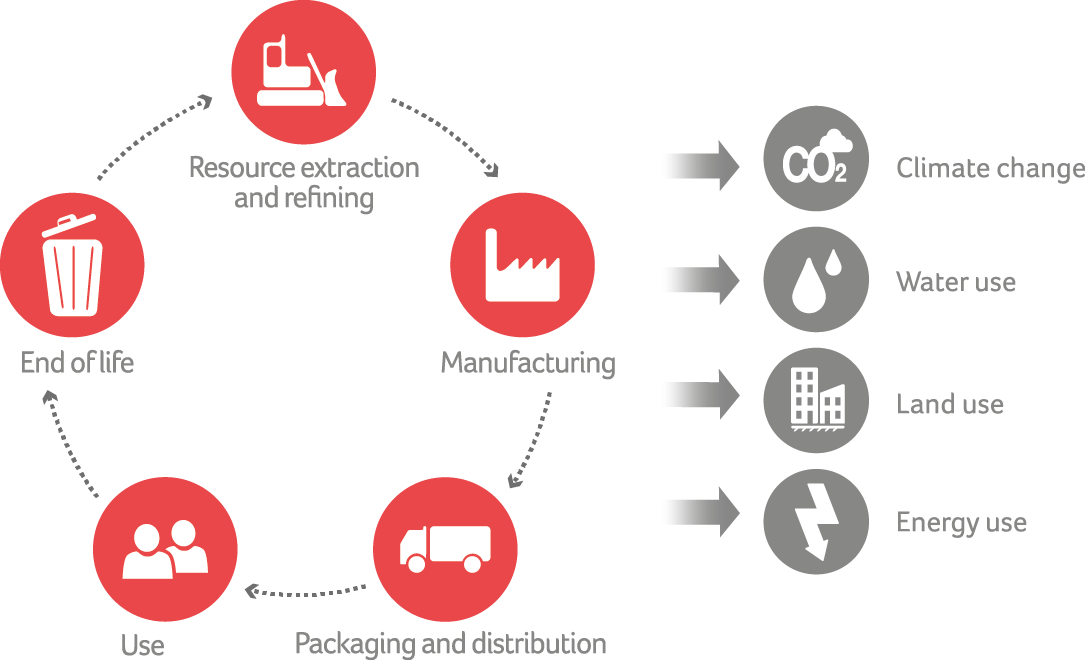
This transition from energy to environmental field, meant changing the viewpoint from an industry system to a broader industry-and-environment system. My first question was how to quantify these exact industry trade-offs for environmental benefits. One of the major goal of Industrial Ecology (IE) is to calculate the exact consequences (or impacts) of every small process (right from the metal extraction, i.e. mining to the disposal of the final product used by a consumer) and material used in the industry. The different fields in industrial ecology (try to) encompass every industry functioning worldwide e.g. one of the database, called exiobase 3, includes 163 industries across 49 global regions. So yes, a lot of matrices to deal with. The environmental impacts themselves are usually divided into many categories, for example, there is greenhouse gas emissions, which is quite heavily reported, but then there are also many Eco-toxicity indicators which are useful to understand water or soil pollution.

Challenges and Methods of the field

As a data-scientist the first thing I could peculiarly note were the depressed and wandering researchers – asking “where did you get the data from?” Because that is one of the hardest part in this field: to get RELIABLE and high-resolution (spatial-temporal) data. Obviously, there are many databases available internationally (sometimes regional/national databases are more detailed though) and there are many petty battles on which one is better. But a constant effort is made in the field to gather or update this data via numerous discussions and partnered research with the industry stakeholders. It is mostly a tricky business because the industries are not very open with their data, and most of the data has to be aggregated, probabilistically estimated and/or computed from many industry process assumptions.  This means the methods used in the industrial ecology are majorly complemented with statistical tools ranging from data preprocessing to advanced Monte Carlo simulations.

But at the end, which methods are core to the industrial ecology? Especially in the field of environmental engineering, the methods of Life Cycle Assessment (LCA) and Material Flow Analysis (MFA) are something, which you will hear almost on a daily basis. The name giveth their purpose. There are many other methods e.g. input-output analysis, which aims at understanding the supply chain processes and associating exact impacts of these processes. As can be clearly noted that the industrial ecology entails a lot of simulation and modeling, and thus the big data analysis methods like Machine Learning have become quite common in recent studies e.g. to use GIS data and aggregating/ classifying the data based on the land-use development over years. Having said that, as much as this field of IE has immense expertise in environmental tools and methods, there is a lack of data science experts, which makes some complicated big data tasks difficult to be solved on everyday basis. For example, the problems can be as small as connecting a database to the server or as big as merging heavily complicated GIS and neural network models’ results together and aligning all the outputs of the databases together.

Image courtesy: ecoinvent.org (life cycle assessment)

Image courtesy: ecoinvent.org (life cycle assessment)

Finally, the purpose of the industrial ecology is to make industrial processes ‘ecological’ or at least more sustainable. And this includes a lot of stakeholder interaction, multiple group discussions, interviews, surveys, workshops with producers to consumers. As it is difficult to interact with all the stakeholders, there are other simulation tools and collaborative disciplines like Agent Based Modelling (simulating actions of many ‘agents’ in a community, a bottom-up approach to understand impacts caused by individual and societal actions), and social sciences/ economics, which have made industrial ecology more holistic. 

Multidisciplinary aspect and the research network

This multidisciplinary aspect of the industrial ecology makes it more distributed in expertise all around the world. This is not just limited to different industries, but also spread across international schools (e.g. NTNU, Yale, Tsinghua, etc.) and many environmental fields (biodiversity, air pollution, land-use changes, etc.). Personally, I became aware of these universities and groups via multiple events: There are many conferences in this field, but the generally ‘big’ conferences are: Gordon Research Conference in Industrial Ecology and International Society of Industrial Ecology conferences. But then there are more specific ones, e.g. Socio-Economic Metabolism section of the International Society of Industrial Ecology (ISIE-SEM) or Food Life Cycle Assessment (Food LCA) conference, Society of Environmental Toxicology and Chemistry (SETAC), and so on.

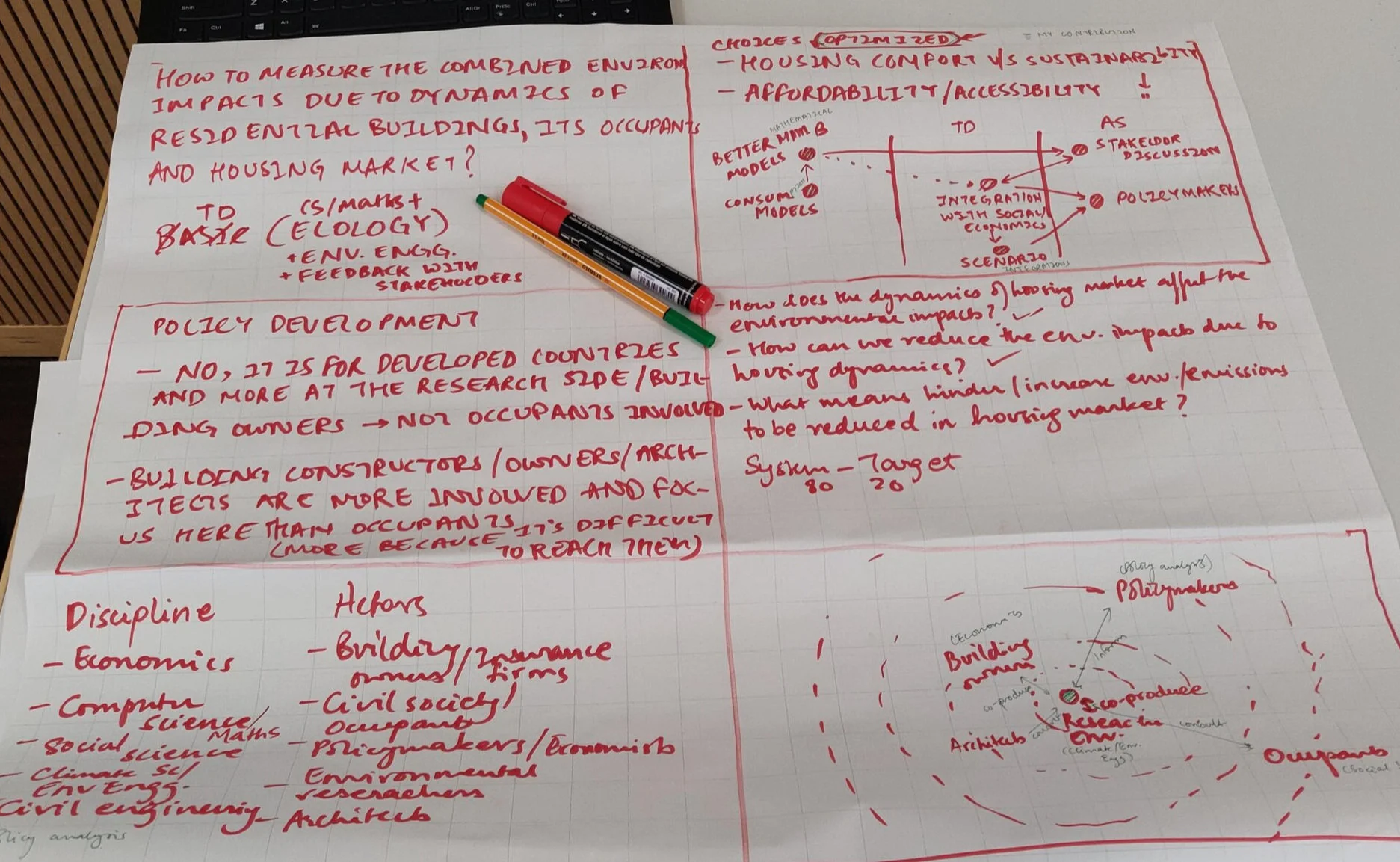
IE exposes you to many other fields and industries in depth as well – I stepped into the building industry through my project, not just in the energy systems (primarily heating), but also in the material and process of the construction sector of this industry. Additionally it exposed me to better network in the building industry e.g. the recent conference I was part of was CISBAT (Climate resilient Cities Energy Efficiency & Renewables in Digital Era), which is not an industrial ecology conference per se, but it invites many researches in the climate resilient cities’ design.

Transdisciplinarity of my project (doodling during a workshop)

Transdisciplinarity of my project (doodling during a workshop)

What is ahead

Looking it from a data-science perspective once again, as much it is my personal need to collaborate further with Computer science (CS) researchers, it is also something important for the field of industrial ecology I believe. IE needs more support from CS methods; but also it needs setup of protocols like better documentation and opening of databases. There have been definitely good progresses in that direction for better data-management protocols in IE. But all these efforts are only useful, if we bring in maximum validation of these data-models with the industry stakeholders – to provide more robust models.

Following up on stakeholders, the bigger purpose and advantage of IE is to interact with stakeholders in industry for actual policy implementation. Due to this stark communication gap in research and implementation, sometimes it becomes quite difficult to let the result become an actual decision. So the aspect of interdisciplinary research needs to be definitely encouraged, right from PhD students to the grant providers. Thus, more soft skill training and workshop to stakeholder discussion management is a must. Because only with these ‘real-world’ collaborations the real ecological industries can be achieved, and all the PhD self-doubts would be well paid-off.

Alumnus speaking: Life after finishing data science

Originally published in EEMCS (TU Delft) magazine: Maxwell.

Being associated to more than one department, life after masters has been well… filled with multiple opportunities, but challenging and yet rewarding in every way possible. So before I dwell deeper into the opportunities, challenges and the rewards, a brief about my life before and during EWI: I graduated in 2018 from TU Delft with masters in Data Science (Computer Science) from EWI and masters in Policy Analysis (EPA) from TPM. Before my masters, I did my bachelors in engineering in India. Growing up in India, I have seen how lack of basic facilities like electricity or clean water hampered the development of rural and urban slum localities. This motivated me to start a project on rural development near a village during my bachelors in Mumbai, and engage many engineering students to develop technical solutions for these basic issues e.g. access to clean water, better livelihood options, etc. However, during implementation of these amazingly innovative technical solutions, we realized that implementation in rural or not-so-developed region remained a challenge because of the lack of coherence of policies, people/industries and technology. Thus, I decided to pursue masters in EPA or Engineering and Policy Analysis at TU Delft, which is a very unique program tailoring the policy development for industries with multiple stakeholder clashes. During this program, I realized that policy analysis meant a lot of data-driven modelling. This opened up the whole world of better data models i.e. data-science, for me. For example, I could use them right from Machine Learning and Neural Networks for understanding patterns in census data, to Agent Based and Artificial Intelligence models for understanding the reasons (motivations) of behaviors of different actors in a given environment/ system setting. Thus, I finally took up the master thesis, which entailed my work in two universities (ETH Zurich) and under main supervision of two departments (TPM and EWI at TU Delft). My project was on finding solutions for the major socio-economic and technical barriers in implementation of peer-to-peer electricity trading platforms for rural electrification in India [1]. The theses ended up being awarded the best graduate of TU Delft, so all-in-all life until EWI ended quite okay after relentless working weekends and nights. 

The opportunities after graduation

But what happened to all this after my masters? I will first tell you about the bright side of the picture – I got multiple opportunities to continue my work, improve my skillsets and meet many amazing people in the similar sector. The first biggest opportunity, which came up, was with idea of Energy Bazaar [2]. Combining master thesis project of Dirk van den Biggelar (System Controls, 3ME), Yvo Hunink (Sustainable Energy Technology, EWI), and two of my theses, we came up with the idea of working on a startup, Energy Bazaar. Energy Bazaar is a blockchain and AI based peer-to-peer energy-trading software platform, which allows trading of electricity from one solar rooftop with excess of energy to another house, which needs energy. Through our master projects, the idea originated and we created a basic simulation platform as proof-of-concept with developers from different part of the world in a blockchain hackathon. Also, through a hackathon at COP23 in Bonn (Climate Change Conference by UNFCCC), we developed another proof-of-concept to integrate this platform with hardware like communicating smart meters, with a multi-disciplinary team with blockchain, AI, hardware, marketing and frontend specialization. 

The next opportunity which came to me personally, in the same time of development of Energy Bazaar, was a PhD opportunity at ETH Zurich. Due to my multidisciplinary experience in policy design, and data modeling from AI-ML to data management, I found a sweet position at Environmental Engineering lab of ETH Zurich. My ongoing PhD project is about developing AI and ML models to understand the consumption behaviors in urban residential buildings and to suggest policies to building owners (and Swiss economy) to combat their environmental footprints. This work has been extremely good learning experience for me until now, where I am being put out of my comfort zone every day. On a daily basis, the tasks can be anything or everything between - developing neural network models, understanding how the environmental emissions are calculated for an apple to an air travel, talking to building owners in German, developing schemas for terabytes of data in postgres, working with social scientists and economists, teaching a class or two, supervising a student, or just lying in the grass. 

Facing various challenges

As much as all the above opportunities look like a rosy picture, here is the hard truth – it comes with many tough challenges. The first challenge I faced as the team of Energy bazaar was implementing the proof-of-concept solution to real world pilot. After multiple discussions, there were some successful partnerships established in India, but with passing time, they fell off, due to differences in research-industry motives. The implementation has been a challenge at a technical level as well due to the limitations of storage solution, lack of accessibility to reliable telecommunication networks in rural India and multiple infrastructural issues. Also, with all of us doing Energy Bazaar as a part time stint from three different countries, the responsibilities have been difficult to manage. However, having said this, the main challenge I think which remains is the “newness” of the blockchain technology and peer-to-peer energy regulation market. At both the technical and the policy front, Energy Bazaar is a very innovative challenge and opportunity to the current infrastructure and policies of not just India and developing counties, but also many developed countries. Many solutions in energy p2p market are coming up, but all of them remain a pilot, because of these incompatibility issues of old electricity market regulations and infrastructures.  

Coming to the challenges as a PhD student, I can definitely say for many of my colleagues and friends doing a PhD, life of PhD student is hard – wait, what is life of PhD student? Haha, exactly – so at times, it can be extremely rewarding with you getting multiple results some fine sunny day, but at the same time, it can be extremely discouraging when you run the same model for months and it is still giving you stupid results.  But the toughest challenge in my PhD has been the multidisciplinary nature of it. As much as I see it as an opportunity, I know it is a tough job of an integrator like me to merge fields of social science, economics and energy/ environmental engineering in one data model. 

The rewarding experiences

Now obviously you are expecting me to finish this all on a good note – and yes, there is lot of good stuff or rewarding experiences to share. As much real and hard as it gets on a daily basis (because that is what we sign up for after doing a tough masters or bachelors), I truly enjoy this journey of my life after EWI. I learn so many things every day as a Energy Bazaar co-founder or a ETH Zurich PhD student. Right from management skills in entrepreneurship department to distributed computing in Computer Science department, I can take any course or put anything on real world implementation – which makes my learning go well in both breadth and depth. I get to meet many experts in different fields and get feedbacks for my work, right from policy makers in Vancouver in a ministerial conference, to experts in industrial ecology in international conference in Berlin (All in the same month!). I get to have a multicultural and highly innovative environment every day where I cannot just work in flexible hours and learn personality development skills to languages, but also do sports and spent time in beautiful Swiss nature. The biggest professional reward for me has been to develop the ability to be agile and adapt my work to the situations and environment. For example, we have been adapting the idea of Energy Bazaar to the urban developed parts of the world, especially in the building sector. For the sake of the pilot, it becomes easier to do under our direct supervision (bringing in more partnerships as well) here in Europe, and helps integrate my PhD learnings quite directly in the startup. 

I would like to conclude with my small example of my own experience, that life after EWI can be extremely opportunistic and full of challenges, but yet extremely rewarding. So, keep doing what you are doing even if it gets a bit rough – life is definitely greener on the other side ;) 

Broken notes to TU Delft prospective students

Dear fellows,

You just received that email you were anticipating for days/ months and maybe even years. It starts with “congratulations, we are glad to welcome you to the Masters of…”. Well done. You are jumping, so are your parents/ guardians. Your siblings are teasing. Your friends have mixed feelings. Your cat is shitty as usual. Sharma ji is pissed, though his son is assistant to Jeff Bezos. But still it is nice, overall.

And then the reality kicks in within few hours - ‘I need to resign/ leave/ travel / accept / become..’ - everything in few weeks. I know it is a lot. So I thought I would help/ make it more complicated for you by being slightly technical at points, and utterly vague at many ( come on, I was trained as a policy analyst).

PC: Vinay Bhajantri

PC: Vinay Bhajantri

First things first, Logistics:

1. Get over food!

I know if you are from a spice-filled nation like India, that is the first thing that comes to your mind (and my mind), but people - the world survives without Roti and Dal everyday, so take this as an opportunity to explore new cultures and cuisines (Dutch have every possibility of boiled/fried potatoes and combinations with anything else edible, sorry for you already: croquettes are not that bad deal though, and then there are bonus kruidnoten Sinterklaas times). If you are moving to Europe, you have Asian and Indian stores in almost every city (max. 30 min from wherever you are at). So chill. Or just look in the maps, if you are so obsessed. Having said that, if you want to, bring a pressure cooker, that shit cooks everything to heaven in minutes. There are doner shops and nice cafes in the university, so you can buy food at campus as well.

2. It is the cutest town, but weather is cursed.

In terms of location, Delft is busy like crazy when it comes to housing, choosing something close to university is wise but costly - and you can always ride the bike - trains your endurance. Delft is super pretty with the cutest square possible called the beestenmarket. You would find students crying there about their theses all the time, so you would have enough social support. Be ready for all time rains, and winds. You can buy everything in the shops at Delft - but a raincoat/ windcheater would be useful (screw umbrellas, they are useless here). If you do not/ cannot use a bike, you have good public bus/tram services - it is just costlier as it is charged per trip. For that you need an OV chipkaart, get it some time - and a personal one is better as it offers discounts, and reimburse options in any issues.

3. Euros (“look at that conversion rate rising”)

In my estimate, you would not be spending more than 100 Euros a month on food - but this is highly subjective. Expect something like 400-600 Euros per month for housing. You need a bike, so add - 100-150 Euros for a second hand bike (remember this is one time cost, till it gets stolen - get the best lock possible - and lock it, don’t get high and forget about it). You need insurance of around 50 euros a month. You need to get an OV chipkaart and load money in it for every travel. You need miscellaneous charges of about 100 euros (extreme, but still helps to keep this especially in the initial settling months). As many of you have taken loan, I can imagine it is difficult to let go of the conversion rates to INR on every product, but try to stop comparing as soon as you can - it will just give you some mental relief. You are here to learn more, and you will pay it off. Trust yourself. Try to enjoy what you have. Easiest way is to keep a budget for every month and maintain it with apps like “Grip” by ABN AMRO or other third party apps like “spendee”.

As you pay a year’s expenses anyways with your tuition fees, you should be able to manage with it for a year. In many cases, you might also end up saving these expenses for next year. So don’t worry too much for the expenses when you enter - just focus on your studies. Everything else is there in your bank ;)

Next, monetary supports:

1. Scholarships

They are tricky, if you don’t get one of them while your admission (which are anyways limited). You can find them anyways on the TU Delft page. There are some external ones to help you during your coursework, but they are not available for everyone and all the time: they are called Nuffic scholarships. There are few more external ones like SSVO, but they are very competitive, so keep this in mind - and oriented towards specific requirements (e.g. during the ending of your masters). RAS is another system which helps similarly during the end of the education, but please apply only if you meet the conditions/ eligibility. Overloading applications doesn’t help anyone.

2. TAship/ RAship

This is handled very differently than US schools, so many students come with the perception that it will compensate for your tuition fees. Keep in mind that the tuition fee is mandatory for TU Delft, till you have a scholarship which specifically waives it (unlike Holland Scholarship which just helps your expenses). So TA or RA position is obtained only after you ask a professor on your own and discuss with them. They are not always available with every professor, but sometimes there are advertisements, so keep your eyes and ears open. Also, note that this takes a good amount of time, additional to generally demanding TU Delft courses. So think if that additional income is worth the time you cannot spend on your work or not (but this is totally personal).

Note an important thing - Your insurance usually changes as soon as you get such a position, so do write to sucsez about it. You pay much more then, but then you can also apply for the health allowance to get back a lot more : It is called zorgtoeslag (as your income is not very high as a TA/RA).

3. Student bodies/ activities

Almost every student body in the university is unpaid work, so keep this in mind (unless a few like Energy Club - at least till the time I was involved). Do not enter to get monetary benefits, but I assure you will get a great international team experience - so I highly recommend them for letting some steam off from the studies. But consider the time constraints, nevertheless. Some student bodies allow some credits, but I am not an expert in it: it is better to go on their websites and contact them directly.

4. Internships/ Thesis

Internships are usually credited in the university and also there are good affiliations of universities for doing them. There are sometimes restriction that if you do an internship, you cannot do a company thesis. So check this with your department. They are usually (should be) paid. They are great way to know Dutch working culture as well, if you plan to work in the Dutch environment. Learning the language is a great asset to socialize with everyone around in the workplace.

Then, Research/ courses:

1. Courses

You are expected to work on 120 credits as a master student - out of which usually most demanding is the thesis work of 30-60 credits, depending on your department. The rest of the course work is usually time consuming as well (you would find TU Delft library usually full with students working on assignments) - every course is 3-6 credits, were every credit counts for usually (more-ish) 28 hrs of work. TU delft stresses on groupwork, so get used to fights, disagreements but much better quality work in most cases.

2. Research/ Thesis

As mentioned this is the most intense time of your masters - it can be quite a roller-coaster ride. Be ready for it, it is okay, it happens for everyone. It is good that many students start their thesis almost at the same time, giving a nice cohort support. So use it for sharing frustrations, and usually supervisors/ professors are good way to go if you feel completely lost. They wont judge you (mostly) and support you, as a good thesis helps the department as well. So lose the fear and discuss, research will follow well.

RAships are good way to extend your research. You can get them after your thesis (I would personally avoid them during the thesis time), or even before. Always discuss the possibilities before thesis is going to end with your supervisor, if you are interested. These can be full time employment positions as well (but they are uncommon, usually it is a part time activity which students take while applying for full time opportunities in research or industry).

Finally, jobs/ PhD.

After the master thesis ends, and as you are no more a student, the visa status changes and you would have to apply for a zoekjaar, or a search year to stay in the country (if you would want a job/ position there). It is costly affair, but highly recommended because if you are really aiming for a job, there are high chances industries would give you a chance based on this visa. I do not have much experience in applying or using them, but I have found most of the people getting them have found a job. The reason is that usually you get / need time for preparing your application which you would get in this year and on-average you would get a position in 6-8 months. Also, traveling back for an interview from your home country on a tourist visa is usually cumbersome and difficult (employers do not prefer such candidates as well).

For a PhD application as well, if you want to live in the country to apply, get the zoekjaar. Usually, students start their applications before they finish their masters, but it can be time consuming. So chose what you prefer most. There are advertisments on the university pages for Europe schools. For US Schools, you would need to give more exams (GRE-TOEFEL) and apply to the department website and not the group (which is the practice for Europe). You would need similar letters, CV, and details as you did in your masters.

For every field, the opportunities vary, so do not judge one field as another (e.g. renewable energy is a hot topic everywhere in West Europe, but specifically wind is great for Denmark - so check where you actually fit) . Talk to your seniors in that specific field and try to understand what are the best estimates for time of application/ opportunities. Do not rush, you are from TU Delft - you will get something nice, for sure.


All in all, believe in yourself. All will be well. Get ready: You will lose a lot, gain much more.

Groetjes

Rhythima

Edit (addition on 12.04.19): I forgot about adding the startups as a trajectory out of TU Delft. So here is a small introduction to what TU Delft promotes and how it helps startup enthusiasts. For that you have

  1. Yes-Delft - a great incubator which helps you with some great courses and also incubation programs if you actually are ‘ready to startup’.

  2. Startup visa - Similar to zoekjaar, there is a nice provision for staying in the country for at least a year and prove yourself (and your startup). I do not have complete details (though you need to show that you are monetarily stable and need to prove your startup is something actually workable), but there are startups like Envision, who have made it as a successful startup in Netherlands, with only international co-founders. So, sky is the limit :)
Different Masters for humanities and social impact education

After doing the exact research for a year via various students and courses in the development division like masters in development studies and policy analysis or public administration or erasmus mundus  programs, I have realised there are various way via which we can choose a field to serve for humanity. Wikipedia defines development as per the context which we want to refer to.

There is no single definition. But there is something that remains common to all and it is that either we develop the solutions for the wrong which is going on OR we design measures to prevent any wrong from happening in the future.  So this means you have to either work for a sustainable future, renewable sources of energy or against poverty, chronic health issues, etc. if you plan to work in the development sector for humanity. The following are some of the fields one can start working in. The bracket mentions the specialisations for the same.

- climate change (environmental studies)

- wildlife and natural resources conversation (environmental studies and energy)

- internet security - cyber attacks (security)

- increasing slavery, rapes (justice)

- poor-rich gap (economics)

- diseases (innovations - health tech)

- market patterns and changing trends - resource crisis (economics)

- better and sustainable living (design)

Now the issue arises when our previous specialisations or degrees are not in this field. It becomes really difficult to understand that how does one chooses to work in the above-mentioned area then. Relax! I faced the same.

1. Entrepreneurship

Some of us just get a breakthrough idea which can be converted into an enterprise then and there. Some even prefer to do higher studies in that field then. Majorly business schools offering MBA degree will give you this masters degree. This is a trending field, but going for masters in this field is not worth investing. As even running the enterprise for the same years will give you enough practical experience, you can choose to go for with your own idea. And there will be a plus point that you will not be not in the burden of education loan! Though, investors core team members are a challenge to be sorted out initially.

As such you do not require any specific requirement of a degree for the same. Engineering and designing students usually take up this field, but it doesn't restrict to them.

2. Masters in Development studies

This specialisation is usually for students from the arts background. Engineering students are accepted in this field too, but only for specific colleges. The degree offers exposure from women empowerment to international affairs.

3. Masters in climate change and energy conversation

Both these fields demand a specialisation in energy sciences or engineering. Thus engineering knowledge, especially civil electrical or mechanical may be a necessity for this program

4. Masters in economics

Bachelor in arts and economics or even valid internships in finance companies or colleges can guarantee you a position in this higher education field.

5. Masters in design

Mechanical engineering or bachelor in design can be a good head starter. Also, keep in mind that designing guys will demand a good portfolio as it is majorly your CV/resume. So focus on that more.

6. Masters in health technology

This demands bachelor in engineering or medical sciences. As the name suggests it deals with situations to cope up the upcoming diseases or cure the existing ones and also cut down the costs of the major illness.

7. Masters in security and justice

This is kind of more open field. It allows students from justice and law bachelor, to those in public administration to engineering

8. Masters in public administration

Bachelor in arts and administration or political sciences are preferred, but my personal experience (I am from engineering background) have suggested that even a good fieldwork or projects for society can fetch you a good position in masters of public administration.