Community Informed Risk Modelling - North East India
Project Team
Anniruddha Shanbagh
Data Engineer, Arth Impact Ltd (London, UK)
Thesang Sangtam
Project Associate, Better Life Foundation – Farmers Innovation Center (Nagaland, India)
Zanpei Keishing
Plant Scientist, RREA (Manipur, India)
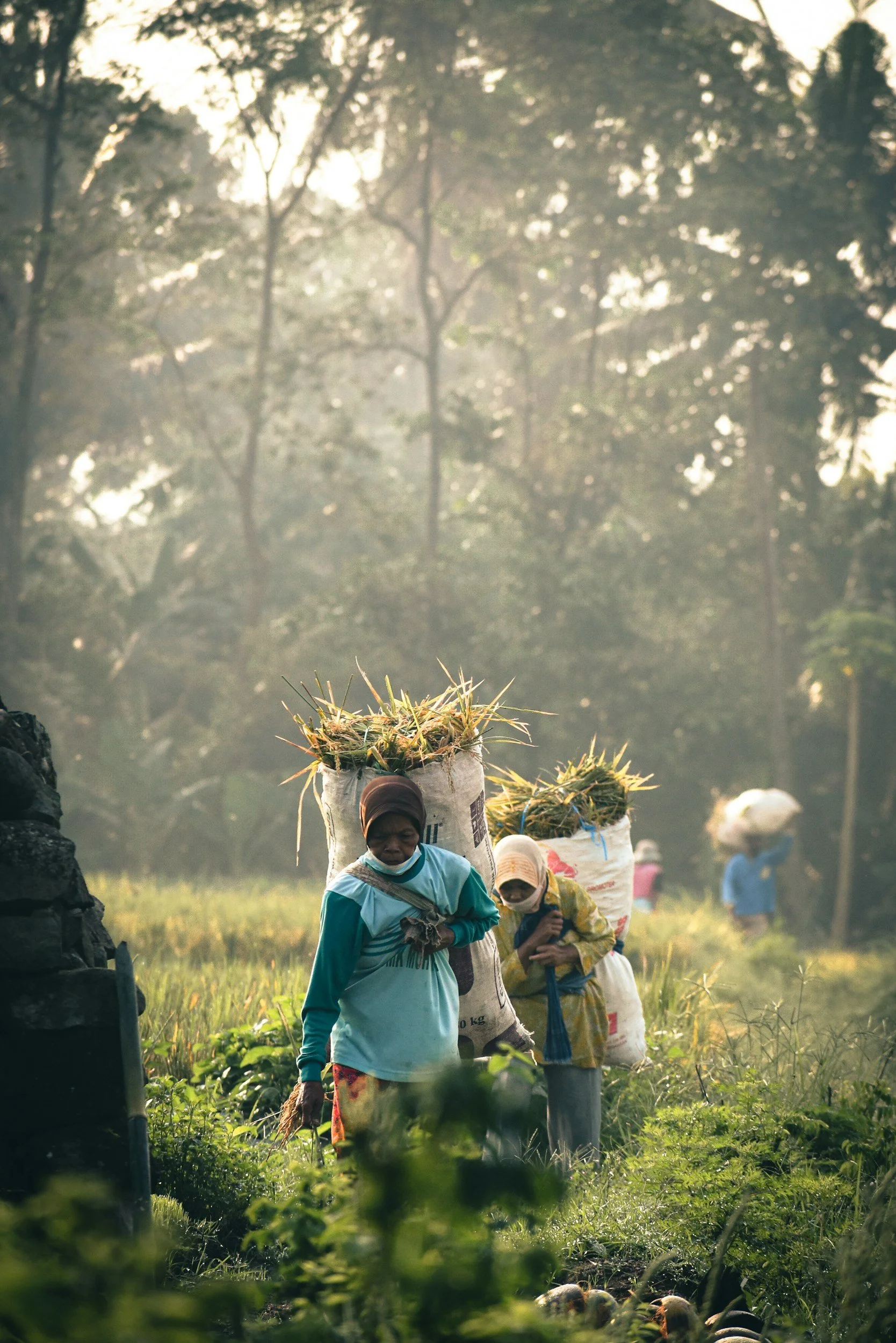
Across Northeast India, farming communities in states like Assam, Nagaland, and Manipur face a tangle of ecological, climatic, and financial pressures that threaten their livelihoods. Rain-fed agriculture dominates the region, leaving farmers acutely vulnerable to erratic monsoon patterns, frequent flooding, dry spells, and long-term environmental degradation. Traditional systems such as Jhum cultivation are increasingly strained, while persistent flooding in the plains compounds uncertainty for small and marginal farmers.
These environmental challenges intersect with long-standing institutional barriers. Many Indigenous and tribal farmers lack formal land titles, limiting their access to credit and insurance. Lenders, in turn, struggle to assess risk accurately due to the absence of appropriate tools that reflect the realities of ecologically sensitive landscapes and customary land-tenure systems. The result is a cycle in which vulnerable communities face high exposure to climate hazards but have few pathways to financial resilience.
Our project brings together a multidisciplinary team of engineers, risk modellers, community practitioners, and environmental researchers to address this problem. The collaboration spans organisations in the UK and India, uniting expertise in catastrophe-risk modelling, GIS and hydrological analysis, community development, traditional ecological knowledge, and institutional economics. Local partners in Assam, Nagaland, and Manipur play a central role, ensuring that the work is grounded in lived experience and cultural context.
Together, the team is developing an integrated, community-informed exposure model that combines physical climate and hydrological risks with financial and institutional vulnerabilities. This approach moves beyond conventional hazard mapping by incorporating local knowledge, livelihood practices, and the structural barriers that shape how risk is experienced on the ground. The resulting model will provide a foundation for more accurate, equitable, and transparent risk assessment—supporting farmers, lenders, insurers, and policymakers in making better-informed decisions.
The project ultimately aims to create a shared risk understanding that strengthens climate resilience, expands financial inclusion, and supports long-term sustainability for Indigenous and smallholder farming communities across the region.
Advisory Team
Dr Eashan Saikia
Mechanical Engineer & Entrepreneur, Arth Impact Ltd (Cambridge, UK)
Dr Rhythima Shinde
Environmental Engineer & Sustainability Consultant, Arth Impact Ltd (London, UK)
Preetish Kakoty
GIS & Risk Modelling Specialist, University of Auckland / Infra Risk Resilience (Assam, India & NZ)
Pratim Kalita
GIS & Catastrophe Modelling Specialist, GEM Foundation / Infra Risk Resilience (Italy & Assam, India)
Mathanmi Hungyo
Researcher – Public Policy & Community Action, University of Sydney / RREA (Sydney, Australia)
Chanthingla Horam
Researcher – Climate Change & Socioeconomic Impacts, IIT Bombay (India)
Sethrichem Sangtam
Founder, Farmers Innovation Center – Better Life Foundation (Nagaland, India)
Nishant Sinha
Advisor – Sustainable Tourism & Agriculture, WWF India (Arunachal Pradesh, India)