Books to understand governance and its issues

A good friend asked “which books should I read to understand the governance and its issues”, and I was baffled, because (a) Can you understand governance just by reading good books? What are the other mediums then? (b) Are people who are writing actually aware of these issues from an unbiased perspective? Here unbiased perspective is necessary because a bias changes the issue itself.  (c) What is governance in general anyway? Is it just a national level governance which runs economies and big fat moneymakers, or governance is something more local which controls the dynamics of rules in our daily life? In layman corporate words, is it the CEO laid regulations of vision-mission or is it the HR who directs your daily schedule and sometimes even weekends?

emmad-mazhari-196223-unsplash.jpg

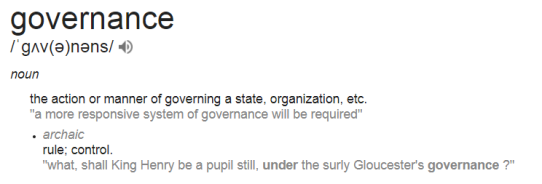
Now, these questions are very difficult to answer. Thus, let’s go on it reverse order – from more basic questions to more concrete questions to help out my friend. So, what is governance – national or local? To understand this, I decided to break it down in a very traditional way, by starting what a dictionary would say. So governance is:
capture.png

 Fair enough, and by this definition, governance is mostly at the CEO level – i.e. national or hierarchically from the top. Now this governance has stayed so because of the way history has always given immense importance to power and was always written by people in power (knowledge or money). This is definitely not wrong if it helped for some time to gain peace/ bring food and help humans survive and progress. But in the same history what was not recorded were the history of commons. For example, panchayats in India or “local sovereignty rights” in Europe or the rules around dykes and agriculture in the Netherlands, have sustained communities without any interference from the governments/kings for ages. The only problem is there is no documentation of it. So was it just wiped out or submerged due to the powerful ones taking over, or was it not a success in its first place? Examples of panchayat raj do not say the former but also does not claim successfully about the latter.

So given the limited information we have, it might be a good idea to read for the top-level rules as governance now. The following are my favorites on those fronts, and also include the ones most recommended. I have arranged them in these orders as the questions posed – first those which talk about basic governance systems, globalization and changing trends (historically arranged in the order below).

Then, next comes those with more details and thus more bias but more stress to eliminate those biases, or at least more awareness of those biases (because details usually give one side of history/ story, as I have seen in such reads.) This is something unavoidable as well because if you get into details, you get into details from one side, and there are so many things to study, you cannot have one lifetime sufficient to get to the other side. Thus, obviously, my reading lists suggestions are heavily biased as well.  I have one suggestion of such a possibly objective book on this front: Book on cultural impacts defining governances by Geert Hofstede. This is meant to be the most objective book (you see some stereotypical biases and genuinely I disliked it at points, but nevertheless there is an effort) it lays out the governance systems formation in different types of cultures through industries – resembling heavily their states.

Finally, talking about the governance issues, there are many famous books on those and the above-suggested books also partially share the issues. Below I will list those which are most famous due to the graveness of the problem (more general to more specific in order of the list below).

The answer to my friend’s questions lies above. But I personally do not want to stop here. Because policy issues are not the end, Rather, it helps start our (policy analysts and scientists) work to give policy solutions. For those, due to my limited exposure, and over-attachment to my birth-land and sciences, I follow the ideologies of Amartya Sen, Noam Chomsky, Nikola Tesla, Elinor Ostrom, to some extent Marx, and coming to the fiscal policies those of Raghuram Rajan. And thus I suggest some reads by them, or beyond (from more realistic to more dreamy solutions – in order):

Finally, I believe myself that decentralization is the key solution to many policy issues and people I do not necessarily like but create a lot of buzz like Nassim Taleb, or people those I hear (blindly, sometimes) like Vitalik are proponents of them. For those interested to understand decentralization in bits and pieces from a historical perspective (Also they help in understanding decentralization as policy solutions): there are some nice blogs/books like below, but they are rather very academic – and do not talk to you like a normal human being. But nevertheless, an interested soul can always give these a try (arranging from basic reads to more complicated texts).

  • Blog by Jean Bonnal is very simple introduction

  • Book (+1) by Jean-Paul Fauget with stress on Bolivia

  • Book with stress on Small Towns and Decentralisation in India

  • Book on Uganda.

And coming to the final question, I have the cliche answer that: No, you cannot understand the governance by just reading books. Nevertheless, it is a far more (sometimes) trusted mode than the typical media consumption. I prefer some nice video channels like Big ThinkTed-EdSchool of LifeKurzgesagt – In a NutshellPublicResources for understanding history and new trends, generally. I have my doubts about Vox due to its historical videos with many biases, but it passes a mar sometimes. For news I only have two sources: The Hindu and Al Jazeera. I loathe American media.

The most important tip (which works for me): I am very very very choosy about my (social) media consumption, I subscribe to very limited channels and follow limited people. Does that make me a hypocrite for my idea of being more broad and liberal? No. I test them, and if there is a very shallow or a one-sided discussion happening – I reject those mediums. This helps me gain more clear and quality knowledge about one system (in this case, governance) well.

Enjoy Reading!

Understanding Power by Noam Chomsy

Noam Chomsky breaks down power into different segments to show its real face at political and corporate level. It is an equally important book for a leader or a citizen. Sometimes while reading I felt he was overly pessimistic, but then there are good supporting facts. But isn't his viewpoint also a bias? I am not saying power is good - or the USA had pure intentions to save civilians in Iraq (actually exactly opposite: no intention related to civilians) - but there is one main point I think or find missing till now.

I think it is important to acknowledge that sometimes power come beyond any logic or intentions or facts. Sometimes, power comes into the picture (or the USA invades) only to exercise power - to showcase "I am the leader". Following text includes personal notes (mostly a comparison to the developing world) and a summary of the major takeaways. Thus, at points, I might digress a bit from the discussion in the book specifically.

  • In the first few pages itself, this book clearly shows the critical view Chomsky has against the powerful country of the USA. But I find it interesting to note that as much as the USA exercises the power, it has people like Chomsky who can stand and criticize every move of the powerful ones even when the country is under a terrorist attack. I see the developing countries like India still facing issues at that front - because having a voice against those in power will bring you nothing good at least personally - might in the slightest case inspire one or two, but would surely lead you to many more troubles. But anyways, let's look at what Chomsky actually has to talk about:

  • Effect of terminology used for propaganda (basically how and why do we choose these words in media to showcase power?)

  • Special interests are only for the deprived sections of the community and do not include only one segment - corporates - because they are national interest - so is defense.

  • "Containment" of Russia - how is the USA actually containing them when they have never crossed more than their neighbors? Chomsky criticizes historians to stick to these words because they have been used by leaders. He compares it very accurately with how Nazis used similar terms as they were "under attack" by Jews.

  • "military spending is our method of industrial management-it's our way of keeping the economy profitable for business" - now look at this, I completely agree to this and when Chomsky wrote this it was not very common to talk against your own defense. If in India, you would say one thing against the military (Arundhati Roy, Gurmehar Kaur), you already have threats. So, if we continue at this pace, it will still take India ages to actually have a free country from power. Therefore I think - It is very important for developing countries to leapfrog - and adapt not just technologies but ideologies, freedom of thought and not just expression.

  • Usually, power is used not to deploy what is right, but to prevent eliminating something which might become more powerful. That's why communism movements were "contained" by the USA.

  • If "business elements are not represented in dominating the state
    much beyond their numbers", we fail to recognize the country as a "democratic" and Chomsky here gives the example of Nicaragua.

  • What he talks about GDP is so true to Indian context (Now one thing I missed saying to keep in mind is he is talking about USA of 90s). So what he talks about GDP is something very basic discussion in economics or social sciences - but still relevant - Economy simply doesn't resemble growth because of a growth in GDP. It does not constitute the growth of poor urban population in any form (a person who was earning negligible if still earns peanuts, his share to the economy/GDP remains zero compared to the rich guy who lived in a villa and now lives in a 10-story house), so how can it be a growth? Now take a minute and look at the number of 8+% of India. There is no denial that this number shows growth still, but it does not show an inclusive growth - and that is where the problem lies.

I realized there are just too many things to summarise in terms of my opinions on developing contexts. I am just on 10% of the book - so I am just going to write main points in bullets now. Then, I will give a comparative study later to the developing countries context.

  • Marijuana legalization is important to curb the impacts of the drugs on lives of poor

  • Crime lives with poor because they are the people who are not protected by "barricades" which rich are protected with. Poor live on crime for survival needs.

  • When you do not have a stable political system, a stable social system, then people look for safety in religions.

  • Japan and Europe's potential to overcome the USA as the superpower

  • The most interesting thing Chomsky starts talking about is decentralization - that agreement do not need to be centrally approved always. He is also a proponent of the participatory parties and decision making (what I see from personal experience is this is something done in European local governments, and also India in rural areas. The difference is that former has well informed educated population, while the latter has social-norm-savvy hierarchical men as participants)

  • The USA has not just opposed extreme right-wing governments but also left-wing governments because " If a country begins to pay attention to its own population, it's not going to be paying adequate attention to the overriding needs of U.S. investor" and that is what USA does not want.

Learned Optimism (Seligman)

The following review is a mix of some notes, personal interpretations and some personal feelings I had while reading the book (on the writing style and similarity of some concepts to other books). The book starts with nice introduction on:

  • Bad things are temporary

  • Your innocence should not be your guilt

  • The modern world thinks of "personal fulfillment as a legitimate goal, an almost sacred right"

  • Ways to work on depression:

    • "gain insight into the childhood origins of turning rage upon the self": but author claims this to be blaming the patient and thus suggests to look for other non-Freudian analysis

    • understand the biomedical reasons and get treated - but treatment means you are dependent on an external force for the feel good and cant give yourself credit

  • "But failure also can occur when talent and desire are present in abundance but optimism is missing"

  • "Our physical health is something over which we can have far greater personal control than we probably suspect"

  • "What is crucial is what you think when you fail, using the power of “non-negative thinking.” Changing the destructive things you say to yourself when you experience the setbacks that life deals all of us is the central skill of optimism"

The book basically has two concepts: learned helplessness : "the quitting response that follows from the belief that whatever you do doesn’t matter." and explanatory style :"manner in which you habitually explain to yourself why events happen. " - "word in your heart"

Explaining the experiments with dogs, the main conclusions were (Rather too long!) that passiveness is either because it gives rewards (people looking after you) or because you have lost hope and think that whatever you do would not matter, and "Learning beforehand that responding matters actually prevents learned helplessness."

Somehow, I love how this book contradicted on surface with the other book on Bodhisattva I was simultaneously reading - Bodhisattva talks about being calm irrespective of any moment (looks to me as being helpless of the situations) and not get too excited and sad, while learned optimism teaches you to train yourself to not to feel helpless to go through any process of pain/happiness. The interesting point here was that Seligman saw this as: helplessness during sorrow would bother you and also when you are trying to achieve something more in your life (e.g. excel on a project). But reflecting further it made me realize that actually both of them have some crux - one asks you to train yourself to explain better and not feel helpless (Seligman) and other explains you that everything outside you is just noise and do not try to control it and thus do not feel helpless.

The initial reservations I had about the extreme depth of the personal journey Seligman was telling me got interesting after the chapter 3 because he started sharing his own reservations about his own theories. Thus now it felt more like he was on the same journey of self-discovery like the way we as readers were. For example he shares this story of oxford university which made me super excited to understand his rebuttals on the criticism of his work.

Then the other nice thing about this book is its practicality - it has some tests which make you reflect on yourself before giving answers to questions like : "why some people never become helpless", with the underlying assumption that helplessness makes you feel rejected and not come out of any sorrow. And the answer to this was explanation that we make to ourselves.

[After again some irritating digression, like Talking about the others theories on success and failures attribution by the people - "what makes them successful" - actually decides WHO becomes successful. Also following PREE, he said that if you always got rewards for your efforts, you give up much more easily. Relating these two - it was important to note that people who were successful were influenced by the schedule and how they explained to themselves that why they were successful. Seligman talks again on why some people become helpless:]

First he discussed on permanence stating that saying "always" for bad things is pessimism, and saying "always" for good thing is optimism. Then going to pervasiveness this is about taking things limited to their context and not universally in all aspects of your life. in case of bad events and taking good things universally. HOPE (permanence+pervasiveness) is an important point, Seligman says, because it tells how much you take bad things as universal and permanent - which leads to pessimism. Finally, personalization leading to your self esteem is important on how you blame the situations in terms of good and bad situations. Good should be it was because of me and Bad should be it was because of external events (there is a warning here of undermining responsibility - but it is also imp. for depression).

With good explanation to the problems about pessimistic lifestyle: affecting thought mood, behavior and physical responses. He mentions importance of acting rather than thinking - and a distracting task would help more. Then he mentions the steps to apply cognitive therapy to conduct an optimistic personal dialogue:

  1. Learn to recognize automatic self-blaming thoughts

  2. Gather evidences why they are wrong

  3. Make different explanations - reattributions

  4. Learn to distract

  5. Change your general assumptions or premises

Moving on to the premise of success, Seligman talks about three characteristics important in challenging job: aptitude, motivation and optimism. Interestingly, he also discusses that pessimists are usually wiser and thus important for a company, but this means moderate pessimism is fine if it does not make you suffer and cause depression. Then he goes explanining the need of optimism for a good health summarizing to pessimism makes you passive.

It is nice that Seligman explains the effects of school, college, childhood, religion and culture on our actions - but if you are determined to just work on what to do better you can skip these chapters. Though, frankly, I enjoyed going through them (sometimes they were too much extended again with his personal experiences).

Then finally he moves to the most practical part of the book explaining the need of the ABC - Adversity, Belief and Consequences - for understanding your thought process. The two steps possible to change this loop is to use distraction, distancing and disputing. Distraction can be physical (shouting stop, e.g.), dispute is the last D in ABCD and distancing is buddhism :P

Another method is to argue with yourself on negative thoughts : asking if there is any evidence, alternative, implication or usefulness for all of this negativity. Then he asks to add another E of energization in the process of ABCDE to change your adversity and Belief (Adversity can be replaced with bad situations created by a friend as tests).

Responsibility vs duty: discussion from "the reader"

"The reader" might not be very interesting read in terms of language, but this particular review is on the premise which starts a great debate. It is very engaging because it is not just from a recent history, but it also raises some questions about choices for the future.

I think The reader, and Kafka on the shore (discussions on Eichmann), both of them discuss a very same topic at length - responsibility versus duty, which is a very thin line.  In Reader [spoiler alert], Hanna works as a guard of Auschwitz and does not ever think that what can be wrong to guard and jail "prisoners" when it is her responsibility. [I definitely recommend watching the movie for that particular scene.] You take up a responsibility and are responsible for a work, it means you to do it out of your own will. But when you do it as a duty, you do it from a perspective of a moral obligation i.e. not necessarily your own self-interest.  Throughout the book, Hannah believes she learned only one thing i.e. reading. What she was doing as a guard of Auschwitz was her responsibility. In the end, she kills herself with the realization of her duties, which she understands based on the books on concentration camps, or a larger view of the world she gets.

I think in today's world, that perspective is the most important one. You feel to be born for something you are best/good at (the way Eichmann was) and then if you pursue it with pure ignorance about the worldly duties you have, such histories would repeat - again. And again.

There is also a discussion where two people are discussing the morality of her stand. She is just one representative of many other people who used to work at Auschwitz (around 8000!), and in fact representative of all the ignorant (by choice or force). At a personal level, this also reflects a very recent debate which millennials go around and around - mission or passion.

[First written on goodreads]

Bodhisattva (Shantideva)

The following is summary of the chapter by chapter of Bodhisattva. The introduction was already pretty helpful for reading, and to narrow down to the crux of every chapter was as follows:

  • The excellence of Boddhichitta: An introduction to different types of people (who have sins, who might be already working out of compassion, etc.) how preaching this knowledge would bring pure joy.

  • Confession: Here, Shantideva confesses his own sins in form of anger, jealousy, ignorance - here he is completely taken down by the fear of lord of death - and confirms total dedication to the teachings of Buddha

  • Taking hold of Boddhichitta : He realizes the importance of compassion and thus dedicate his life for good of every living being on the world, and resigns from his own body dedicating it to good of anyone who would take it. He also then summon all who are wandering and trying to find the purpose of existence.

  • Carefulness: This chapter is like a warning to those who start preaching but then leave it mid way or do not pursue this with full dedication: it leads to reduction of welfare of everyone. Shantideva promises to act attentively as his life is fleeting and he believes human form to be the most precious which he is in living in now. Human form is believed to be the only form which will allow practice of virtue. Mere experience of pain does not let it go and more evil reoccurs with sufferings and thus Shantideva aims to remove these sufferings and clean his sins altogether. Then he talks about the power of his strongest enemies: anger, lust who have endured so long besides him and warns to not give any aid to these feelings, and warns about the injury/ pain fighting these pains will cause. Finally shantideva calls these feelings as pure mirages (but makes you aware about an indolent mind) and thus they have no place to live if once fought off.

  • Vigilant introspection: Finally shantideva starts talking about need of mindfulness to control our emotions and feelings to get rid of all our fears. He stresses on the need of eradication of distractions, ignorance and finding discipline. Ignorance and lack of introspection is like a leaking jar where even if you learn buddhist teachings you will not be able to retain or memorise anything. Then, Shantideva starts laying down the ways of introspection [except some of teachings of page 74 which were too much on discipline and difficult/ unacceptable in today's world] and the different sutras:

    1. he asks to keep moving, be gentle, look at your faults but not be distracted, understand your needs and act accordingly

    2. Keep verifying and inquiring how the body is being disposed

    3. keep a watch on what and how the mind is engaging and strive to master concentration

    4. in times of generosity, the mind should be relaxed

    5. Fix target and chose to keep your mind simply on that - do not be distracted - and this will prevent growing any ignorance

    6. Disengage from pointless conversations or gossips because they are simple delights and stay away

    7. Think before you speak

    8. When anger arises, stay like a log and do no speak

    9. Similarly if you long for priase, criticise or spoil someone's name, use fight, want wealth, look for honors, overlook other's needs, feel attachment, be a log

    10. "Take notes of your defilements and pointless efforts"

    11. Calmly, with respect, courtesy, conscientiouseness, awe - work for others' happiness

    12. If people quarrel childishly, let it be - don't be downcasted - treat them with love and understand them

    13. Bear in mind we are selfless or an apparition

    14. Mind and Body are two separate entities - so leave the attachment [page 70-71 are very beautiful in the book it is better to read them]

    15. "Always strive to learn from everyone around" who come with the spirit of counselling

    16. Praise and encourage people whose words and actions are worthy

    17. "Take pleasure in excellence of others" and do not do anything which is not for others' sake - that will help in enlightenment

    18. "Speak gently with moderation"

    19. "In whatever actions you perform, you should not be dependent on others"

    20. "Others' good should be supreme" and progress is important with growing

    21. "Eat only what is needful"

    22. Share the knowledge and learning with those who are defenseless and falling into the evil states

    23. Do not harm your body in meaningless pursuits

    24. Do not teach dharma to the people who are disrespectful and have decided not to listen (I interpreted "covering their heads" as not "ready to listen")

    25. Implement all acts with pure diligence as per the teachings

    26. Preach all these forms of introspection (act-watch your mind and body) with utter truth (implement and act on these teachings).

  • Patience: As the title suggests, this chapter is on cultivating the practice of patience, and the most important thing to overcome is Anger here.

    1. Shantideva stresses that patience with utmost importance to habit - i.e. regular practice. He says that our self is inert and thus remains unaffected, even by anger which is only subjected to circumstances and experiences.

    2. You cannot "become" something - you just ARE (existing) - so you will always be inert to any hatred or circumstances. This also means that when in sorrow, you would remain serene. There is nothing like resistance, for what will you oppose against and to whom?

    3. He also talks about jealousy here : about the absurdity of someone to feel jealous when someone is happy - aren't we trying to find enlightenment for all - then how can we even get a feeling of displeased when someone is doing good in their own lives?

    4. Praise and reputation are childish behaviors - because it leads to formation of the feelings of envy at the first place.

    5. "my enemies should bring joy to me because they allow me to practice patience"

    6. Again he stresses on the need of compassion and working for good of others

  • Diligence: Here shantideva stresses that practicing patience without being hindered by any desires is what can make someone a Buddha.

  • Meditative concentration: Leaving your body is the ultimate goal of mindfulness, and Shantideva here talks about the need to repel from lust.

  • Wisdom: There is a debate between a hypothetical reader and Shantideva here on the belief of this world as an illusion

  • Dedication: Here, Shantideva ends up devoting himself completely and asks for happiness and relieving pains for all

Letters from a Stoic (Seneca)

As Seneca would say to his letters to Lucilius: knowledge shared is learned, here are some simplified pointers from the (partial) reading:

1. Cease to hope and you will cease to fear

2. To be everywhere is to be nowhere

3. I am beginning to be my own friend

4. Live with the people you admire

5. Live in present - do that as you forget the memory of fears and possible fears of future. Memory and foresight can be curse

6. A fool is someone who has nothing but needs everything, a wise man lacks nothing but needs a lot of things - you will always need friends, but if you don't have them you will still be happy

7. A few is enough for me, so is one and so is none

8. You must hate the world or imitate. But right thing is to retire to yourself - neither hate someone for they are not like you or become them because they are many

9. Give up the journey which has no end - if you still long for something more, the journey is not natural - live by mature and not people's opinions

10. A holiday can be celebrated without extravagant festivity

11. Rehearse poverty because only then you can cherish pleasures (This has so much closeness to Taleb's antifragile concept, which I am reading now as well)

12. Anger needs to be controlled because it makes you saner - forget about the cause of it and think of its effect on your personality

13. A good life is available at every corner of the world.

14. Be harsh on yourself to know and rectify what you are doing wrong.